In today’s rapidly evolving technological landscape, the terms “Artificial Intelligence” (AI) and “Automation” are frequently used interchangeably. However, they represent distinct concepts that play crucial roles in transforming industries and our daily lives. Understanding the fundamental differences between AI and automation is essential for businesses and individuals alike as we navigate a future increasingly shaped by these technologies. AI refers to machines’ ability to perform tasks that typically require human intelligence, such as learning, reasoning, and problem-solving. In contrast, automation involves using technology to perform repetitive tasks without human intervention. While both technologies enhance efficiency and productivity, their implications for the workforce, economy, and society are considerably different. This article explores these differences, provides detailed examples, and discusses their potential impact on the future.
Defining Artificial Intelligence
Artificial Intelligence is a branch of computer science focused on creating systems capable of performing tasks that would normally require human intelligence. These tasks include understanding natural language, recognizing patterns, learning from experience, and making decisions. AI systems can be classified into two main types: narrow AI, which is designed to perform specific tasks (such as voice assistants like Siri or Alexa), and general AI, which would possess the ability to understand and reason across a wide range of tasks, similar to human cognition. Current advancements in AI, particularly in machine learning and deep learning, have enabled significant breakthroughs in various fields, including healthcare, finance, and transportation. For instance, AI algorithms can analyze vast amounts of data to predict patient outcomes or optimize supply chains, showcasing the technology’s transformative potential.

Understanding Automation
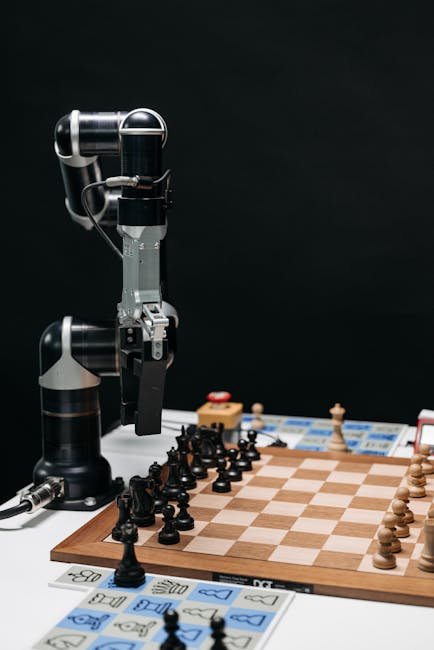
Automation refers to the use of technology to perform tasks with minimal human intervention, often focusing on repetitive and predictable processes. It encompasses a wide range of technologies, from simple mechanical devices to complex software solutions. Automation is particularly prevalent in manufacturing, where robotic systems assemble products on production lines, ensuring consistency and efficiency. However, automation is not limited to physical tasks; it also includes software automation, such as robotic process automation (RPA), which automates repetitive data entry tasks in business processes. By eliminating human involvement in these tasks, automation can significantly reduce costs, increase productivity, and minimize errors. For example, companies like Amazon utilize automation in their warehouses to streamline inventory management and order fulfillment, enhancing their overall operational efficiency.
Key Differences Between AI and Automation
The primary distinction between AI and automation lies in their capabilities and applications. While automation focuses on executing pre-defined tasks, AI systems can learn, adapt, and make decisions based on data input. Automation typically follows a set of rules and does not possess the ability to improve or change its operations without human intervention. In contrast, AI can analyze patterns, learn from past experiences, and optimize its performance over time. For example, a traditional automation system might be programmed to sort emails into folders based on pre-set criteria, while an AI system could analyze the content of emails to prioritize important messages or even respond to queries autonomously. This fundamental difference leads to varying implications for the workforce, as jobs involving repetitive tasks may be more vulnerable to automation, while roles requiring critical thinking and problem-solving may see increased demand for AI integration.
The Impact of AI on Employment
The rise of AI technology is reshaping the job market by creating new opportunities while rendering certain roles obsolete. As AI systems become more capable of performing complex tasks, the demand for skilled workers who can develop, manage, and implement these technologies is expected to grow. For example, data scientists and AI engineers are increasingly sought after, as organizations strive to leverage AI for competitive advantage. However, the displacement of jobs in sectors like manufacturing and customer service, where automation is prevalent, raises concerns about potential unemployment and economic inequality. Moreover, the integration of AI in various industries necessitates a workforce that is adaptable and willing to acquire new skills. Initiatives focused on reskilling and upskilling workers will play a critical role in ensuring that the transition into an AI-driven economy is equitable and beneficial for all.

The Role of Automation in the Workforce
Automation is poised to transform the workforce by enhancing productivity and efficiency, especially in industries characterized by repetitive tasks. By automating mundane activities, businesses can free up employees to focus on higher-value work that requires creativity and critical thinking. For instance, in the finance sector, automation tools can handle data entry, processing transactions, and generating reports, allowing financial analysts to concentrate on strategic decision-making. However, while automation can lead to increased efficiency, it also raises concerns about job displacement. Workers in roles that are easily automated may face challenges as organizations seek to cut costs and improve productivity. To mitigate these effects, companies should prioritize creating a culture of continuous learning and innovation, enabling employees to adapt to changing job requirements and develop new skills in tandem with technological advancements.
The Future of AI and Automation
As AI and automation technologies continue to evolve, their future impact on society and the economy will be profound. Experts predict that industries will increasingly adopt AI-driven solutions to enhance decision-making and operational efficiency. For example, in healthcare, AI can analyze patient data to recommend personalized treatment plans, improving outcomes and reducing costs. Additionally, automation will likely expand into new areas, such as agriculture, where autonomous tractors and drones can optimize crop management. However, with these advancements come ethical considerations regarding data privacy, security, and the potential for bias in AI algorithms. Policymakers and industry leaders must work together to establish regulations that ensure responsible AI development and deployment, balancing innovation with accountability. Ultimately, the future of AI and automation will depend on how society navigates these challenges while harnessing the benefits of these transformative technologies.
Conclusion
In conclusion, while AI and automation are often conflated, they serve distinct purposes and will shape the future in different ways. AI offers the potential for intelligent systems that learn, adapt, and enhance decision-making, while automation focuses on efficiency and productivity through task execution. Both technologies will significantly impact the workforce, necessitating a shift in skills and a re-evaluation of job roles. As we move into a future dominated by AI and automation, it is essential for businesses, policymakers, and individuals to embrace these changes, invest in education and training, and ensure that the benefits of these technologies are shared equitably across society. By understanding the key differences and implications of AI and automation, we can better prepare for the challenges and opportunities that lie ahead.