Artificial Intelligence (AI) has rapidly become a buzzword in today’s technology-driven world, often evoking a blend of excitement and apprehension. With countless discussions surrounding its capabilities, it’s easy for misconceptions to take root. Many individuals, especially beginners, hold onto myths that can skew their understanding of what AI truly is and what it can do. This article aims to debunk some of the most common myths about AI to provide a clearer picture for those looking to understand this transformative technology. By addressing these misconceptions, we hope to empower beginners with the knowledge they need to engage with AI meaningfully and confidently. Whether you’re a student, a professional, or simply an enthusiast, enhancing your understanding of AI will be crucial as it continues to shape our future. Let’s dive into the most prevalent myths that surround AI and explore the realities behind them.
Myth 1: AI Can Think Like Humans
One of the most pervasive myths about AI is that it can think like a human. Many people envision AI as having human-like consciousness or emotions, which is far from the truth. AI systems, including advanced models, operate based on algorithms and data rather than emotions or subjective experiences. While they can process information and make decisions based on patterns, they lack genuine understanding or awareness. For example, AI can analyze vast datasets to predict trends, but it doesn’t possess the ability to reason or feel empathy as humans do. This fundamental difference is crucial to grasp, as it sets realistic expectations for AI’s capabilities and limitations.
Myth 2: AI Will Replace All Human Jobs
Another common misconception is the belief that AI will lead to widespread job loss, replacing humans in all areas of work. While it’s true that AI will automate certain tasks, particularly those that are repetitive or data-driven, it is more accurate to say that AI will change the nature of work rather than eliminate jobs entirely. For instance, AI can take over mundane data entry tasks, allowing workers to focus on more complex, creative, and interpersonal aspects of their roles. Industries like healthcare and education are likely to see AI as a supportive tool that enhances human productivity rather than a direct replacement. Understanding this nuance can help alleviate fears about job security and encourage a more balanced view of AI’s role in the workforce.
Myth 3: AI is Infallible and Always Accurate
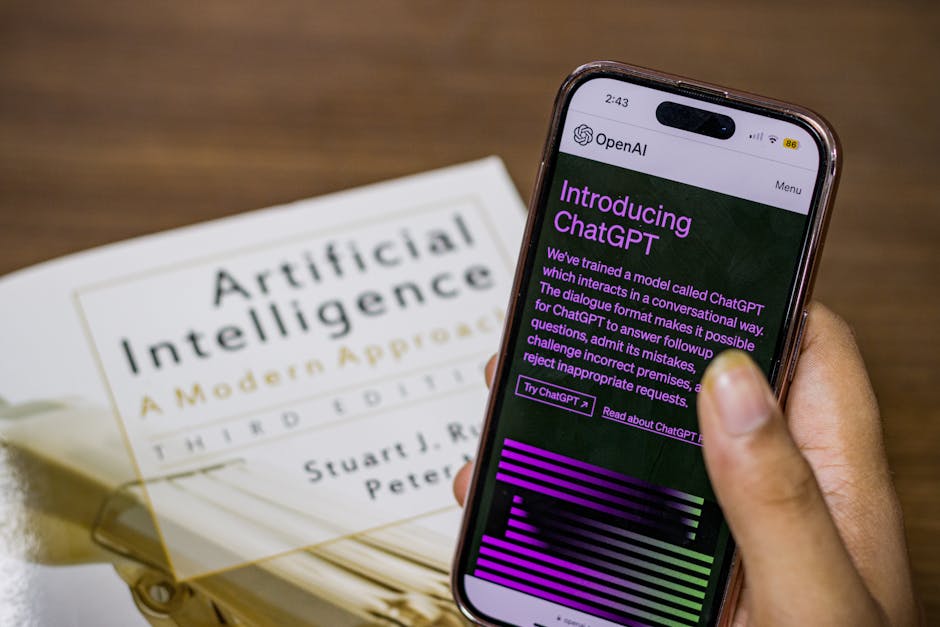
Many individuals assume that AI systems are infallible and produce accurate results every time. However, this is a significant misconception. AI models are only as good as the data they are trained on. If the data is biased or flawed, the outcomes can also be biased or inaccurate. For example, facial recognition technology has faced criticism for misidentifying individuals, particularly people of color, due to inadequate training data. Additionally, AI systems can misinterpret context or nuances in language, leading to errors in applications like chatbots or translation services. By recognizing that AI has limitations and is prone to error, users can approach its applications with a more critical eye and a deeper understanding of its potential pitfalls.
Myth 4: AI Understands Everything About Us
Another prevalent myth is that AI has a deep understanding of human behavior and preferences. While AI can analyze patterns and make predictions based on data, it doesn’t truly understand the context or meaning behind that data. For instance, recommendation algorithms on streaming platforms can suggest shows based on your viewing history, but they do not comprehend your personal taste or emotions. They rely solely on statistical correlations rather than an understanding of cultural significance or individual nuances. This limitation means that while AI can enhance user experiences, it cannot replicate the depth of human understanding or intuition. This distinction is essential for users to maintain realistic expectations regarding AI’s capabilities in personalization and recommendations.

Myth 5: AI is Only for Tech Experts
Many beginners believe that AI is an exclusive domain for tech experts and data scientists. While it’s true that understanding AI concepts can be complex, the reality is that AI tools and applications are becoming increasingly accessible to non-experts. Platforms like Google Cloud and Microsoft Azure offer user-friendly interfaces that allow individuals with minimal coding experience to build and deploy AI models. Numerous online courses and resources are available for beginners to learn about AI without needing a technical background. Moreover, the rise of no-code and low-code solutions is democratizing AI, enabling more people to engage with this technology. By breaking down the barriers to entry, we can encourage broader participation in the AI revolution.
Myth 6: AI is a New Concept
Many people perceive AI as a recent development, but in reality, the concept has been around for decades. The term “artificial intelligence” was coined in 1956 at a conference at Dartmouth College, where the foundational ideas of machine learning and neural networks were first explored. While advancements in computing power and data availability have accelerated AI’s development in recent years, the foundational theories and concepts have existed for much longer. For instance, early AI systems were developed to play games like chess and solve mathematical problems. Understanding this history helps provide context for current AI trends and innovations, illustrating that we are building on decades of research and development.
Myth 7: AI Will Lead to a Dystopian Future
Finally, a common fear surrounding AI is that it will inevitably lead to a dystopian future dominated by machines. While Hollywood often portrays AI as a threat to humanity, the reality is that the outcome depends largely on how we choose to develop and regulate this technology. Ethical considerations, governance, and responsible AI practices will play critical roles in shaping the future of AI. Many organizations and researchers are actively working to ensure that AI is developed in a fair, transparent, and beneficial manner. By focusing on collaboration between humans and AI rather than confrontation, we can create a future where AI enhances our lives rather than threatens them. Understanding this potential empowers individuals to take part in shaping a positive trajectory for AI.
Conclusion
As AI continues to evolve and permeate various aspects of our lives, debunking myths surrounding this technology is crucial for fostering informed discussions. By clarifying misconceptions about AI’s capabilities, limitations, and historical context, we can equip beginners with a better understanding of its role in society. Rather than succumbing to fears or misconceptions, embracing AI as a tool for innovation and collaboration will enable us to navigate its complexities with confidence. The future of AI is not predetermined; it is shaped by our choices and understanding. As we unlock the potential of AI, let’s move forward with a balanced perspective, ready to leverage its strengths responsibly and ethically.